
Team Email Etiquette: Stop Reply All Chaos With a One Page Playbook
Team Email Etiquette: Stop Reply All Chaos With a One Page Playbook ! Support teammate checking email recipients before sending Team email etiquette is a shared set of habits for writing clear, respectful messages, and its core rule is main-point-first: use a specific subject lin

Team email etiquette is a shared set of habits for writing clear, respectful messages, and its core rule is main-point-first: use a specific subject line and open with the purpose. Readers then know what you need and by when before they read anything else, which saves everyone time. The numbered rules below show how to apply that rule in daily team email.
TL;DR:
- Set written reply windows, aiming for nonurgent internal email within 24–48 hours, same business day for action items, and an acknowledgment with a promised response time.
- Assign one named owner to every shared inbox thread, keep teammate discussions in internal notes, and record the reason whenever ownership changes.
- Use an action, topic, and due date in the subject line; state the purpose first, then end with one specific ask and date.
- Before sending an important message, verify recipients, attachments, links, and access permissions, then read it aloud and remove sarcasm, all caps, and extra exclamation points.
Table of Contents
- 1. Which team email etiquette rules should everyone follow?
- 2. How do you set team email norms and onboard them?
- 3. How do you avoid duplicate replies in a shared inbox?
- 4. What subject lines and templates can your team copy?
- 5. How fast should team members reply to email?
- 6. What should you check before you hit send?
- 7. Why does standardizing email etiquette pay off?
- 8. Is a shared inbox the right next step for your team?
- FAQ
- Sources
1. Which team email etiquette rules should everyone follow?
These rules cover common problems in team email. Start with the first two and the rest get easier.
- Write a specific subject line. Put the action and topic up front, as in “Action Required: Q4 Budget Review.” UCLA’s workplace email guidance recommends subject lines that are specific and actionable.
- Open with the purpose. The first sentence states the request or decision needed. Background comes after, and deadlines belong near the top, not buried later in the message.
- Keep it short and scannable. Readers skim on phones between meetings. Use a bullet list when you have more than one ask, and keep each bullet to one request.
- Match greeting and sign-off to the audience. “Hi team,” works inside your group. For cross-team or client-facing mail, use names and a fuller close such as “Best regards.”
- Use Reply All, CC, and BCC with care. Reply All is for answers everyone needs. CC people who must stay informed, and skip it for anyone who only might care. Our post on alternatives to BCC explains how to keep visibility without hiding recipients.
- Pick the right channel. A quick question fits chat. A tangled disagreement fits a call. Email suits decisions that need a record.
- Schedule sends after hours. Write whenever you like, but deliver during the recipient’s workday.
- Reuse templates and keep signatures consistent. Recurring messages should look and read the same no matter who sends them.
- Never send while upset. Draft it, step away, and proofread before you decide.
Practical dos and don’ts lists like these are a common format on productivity and communication blogs, which also stress concise messages and careful Reply All use. A few habits worth adding:
- Name the one person who must act, in the first line.
- Say “no reply needed” when that is true.
- Move side topics into a new email with a new subject.
2. How do you set team email norms and onboard them?
Norms only work when everyone has seen them. A one-page playbook, handed out in the first week, beats a long policy nobody opens.
- Agree on reply windows. For example, 24–48 hours for non-urgent messages, and a quick acknowledgment for anything that needs action. Write the windows down and define what counts as urgent.
- Draft a one-page email policy. Cover Reply All, CC, subject-line format, and which templates to use. Keep it short and easy to read.
- Share templates and subject-line examples during onboarding. New hires copy what they see, so share good examples with them. Our support email templates show common scenarios with subject lines.
- Assign an owner. One person keeps the norms current and runs a quarterly review, so the policy stays current as the team changes.
Misaligned expectations about urgency cause quiet resentment faster than almost anything else, so talk about it early. If you are building templates and consistent messaging from scratch, the email marketing resources from Cerbits Digital are a useful starting point for beginners.
3. How do you avoid duplicate replies in a shared inbox?
A shared mailbox multiplies etiquette problems. Two people answer the same customer, or each assumes the other has it. A few patterns fix most of this.
- Assign every thread an owner. One name per conversation, set before anyone drafts a reply.
- Use internal notes for side talk. Questions and context between teammates belong in a note, never in the public thread where the customer can see it.
- Tag and save views for triage. Labels such as “billing” or “waiting on customer,” plus a simple status marker, show what needs attention without opening every message. Our guide to email triage best practices goes deeper.
- Make reassignment visible. When ownership moves, leave a one-line note saying why, so accountability never gets lost.
Pro Tip: Keep the message visible to the assignee and add a short internal note with context, such as what the customer already tried.
Consistent inbox workflows also cut repeated work, which we cover in the benefits of a professional client inbox.
4. What subject lines and templates can your team copy?
Use one formula: [Action]: [Topic], [Due date or context]. It tells readers what to do and when before they open the message.
- Request: “Review needed: Pricing page copy, due Thursday”
- Status update: “Update: Website migration, progress report”
- Meeting agenda: “Agenda: Sprint planning, Monday 10 AM”
- Incident report: “Incident: Checkout errors, resolved 2 PM”
- Decision: “Decision needed: Vendor choice, by Friday”
Each template can follow the same shape: purpose in line one, two or three supporting details, then the specific ask with a date.
Change the subject line when the topic changes. If a thread about a launch turns into a budget debate, start a new email so people can find it later. Store your best examples in a shared template library, and link it from your onboarding page so new teammates reuse what already works.

5. How fast should team members reply to email?
For non-urgent internal email, aim for a reply within 24–48 hours. If something needs action, respond the same business day, or at least acknowledge it.
When you cannot answer fully, send a short acknowledgment with a promised response time. It removes the guesswork.
University guidance: UW–Madison’s workplace communication guide recommends batching email responses and setting automatic out-of-office messages when appropriate, which makes turnaround expectations clear to senders.
- Batch replies into set blocks instead of checking constantly.
- Use out-of-office messages with a return date and a backup contact.
- Use scheduled send so your reply lands in business hours.
Support teams will want tighter targets than internal mail, and our first response time benchmarks cover those.
6. What should you check before you hit send?
Run this checklist on any message that matters.
- Run spell-check, then read the message aloud to catch awkward phrasing.
- Confirm recipient names, attachments, links, and access permissions.
- Remove ALL CAPS, extra exclamation points, and sarcasm that could be misread.
- If you are upset, wait, then ask a colleague for a quick tone check.
Pro Tip: Fill in the recipient line last. A half-finished email can never be sent by accident.
7. Why does standardizing email etiquette pay off?
Most email trouble on teams is not rudeness. It is ambiguity: unclear asks, unclear owners, unclear deadlines. Shared norms remove that ambiguity, which means less rework, fewer missed messages, and a quieter inbox for everyone. We built our own shared inbox around that idea, with assignment and internal notes so ownership is never a guess. This week, a manager can do three things: pick the reply windows, publish the one-page policy, and name the person who owns it.
— Nick
8. Is a shared inbox the right next step for your team?
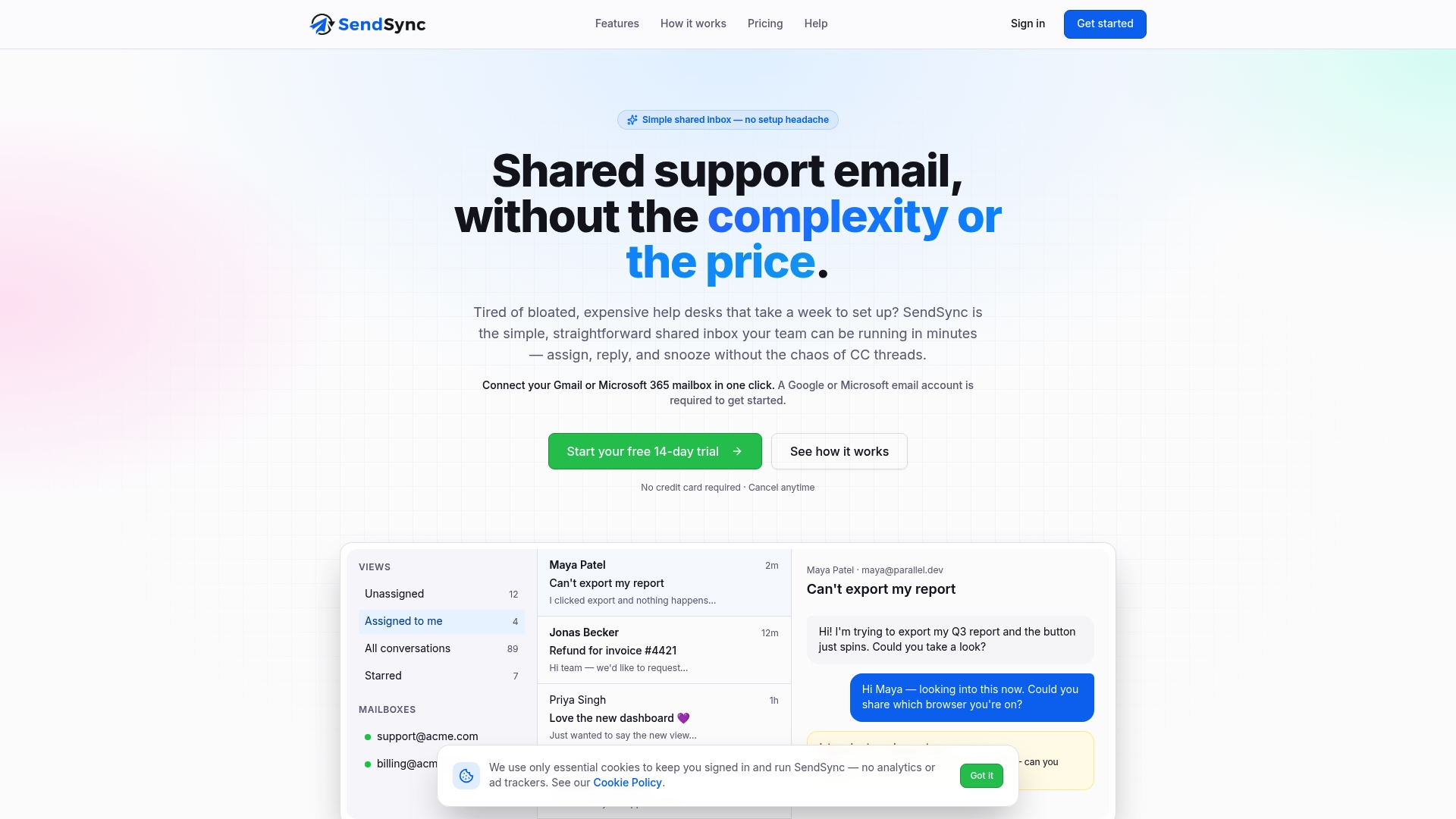
If your team answers customer or client email from one address, etiquette alone will not stop collisions. We built SendSync to help teams connect Gmail or Microsoft 365 and manage shared email. Plans start with Founder at $10 per month. See the plans on our product page.
FAQ
How do you greet your team in an email?
Keep it short and friendly: “Hi team,” or “Hello everyone,” works for internal messages. For cross-team or formal messages, use first names and a slightly fuller sign-off such as “Best regards.”
What is a reasonable reply window for team email?
For non-urgent internal email, 24–48 hours is a common standard. If a message needs action, reply the same business day or send a quick acknowledgment with a promised time.
When should you use Reply All?
Use it only when your answer helps everyone on the thread, such as a decision or a schedule change. For confirmations like “thanks” or “got it,” reply to the sender alone.
How many follow-ups are too many?
Ragan’s email guidance points to a simple “3-email” rule for persistence. After that, switch channels with a quick chat or call instead of sending a fourth message.
Sources
- Email Etiquette in the Workplace | Monthly Management Tips
- The dos and don’ts of business email etiquette