
End Inbox Overwhelm: Email Triage Best Practices for Support Teams
End Inbox Overwhelm: Email Triage Best Practices for Support Teams ! Support team conducting scheduled email triage Email triage is the fast decision process that routes each incoming message to a single next action, not a full reply.

Email triage is the fast decision process that routes each incoming message to a single next action, not a full reply. The distinction matters: answering is slow and reactive, while triage is a sort. Start today by applying the 2-minute rule from David Allen’s Getting Things Done and setting three daily triage windows instead of checking email all day.
TL;DR:
- Batching email checks into scheduled windows reduces stress and improves focus, supported by organizational research that discourages continuous monitoring.
- Applying the 2-minute rule during triage helps clear quick replies immediately, preventing small tasks from turning into ongoing review cycles.
- Assigning clear owners and definitive next actions to each unresolved email prevents tasks from being overlooked or left unaddressed.
- Using shared inboxes with explicit ownership rules and filters helps teams manage messages efficiently and avoid recurring bottlenecks.
- Automating routine sorting with AI tools boosts volume management but still requires human oversight for client-sensitive and complex messages.
Table of Contents
- A quick checklist to run during every triage session
- Step-by-step best practices: how to triage email effectively
- Team workflows, inbox organization, and automation that scale triage
- Author perspective: common team mistakes and pragmatic fixes
- Tool spotlight: how a razor-thin shared inbox helps team triage
- Sources
- FAQ
A quick checklist to run during every triage session
Run this list during a focused 10 to 20 minute sweep, three times a day, and you will clear most of your inbox without answering a single email.
- Batch triage into morning, midday, and end-of-day windows instead of checking constantly.
- Apply the 2-minute rule: reply now if it takes under two minutes, otherwise defer, assign, or mark done.
- Unsubscribe from low-value recurring senders and build filters so they never resurface.
- Give every unresolved email a named owner and a specific next action, never leave it unassigned.
- Use saved views or a split inbox to surface priority messages first and cut down on scrolling.
None of these steps require answering the message in front of you. That is the point of triage: you are deciding what happens to a message, not writing the response yet.
Step-by-step best practices: how to triage email effectively
Most people treat their inbox as a to-do list they answer top to bottom. That approach guarantees the loudest sender wins your attention, not the most important one. Triage flips the order: you decide the fate of every message first, then do the work in a separate pass.
Here is the four-step sequence that keeps triage separate from answering.
- Rapid sweep with the 2-minute rule. Open each message once. If you can fully resolve it in under two minutes, reply immediately. This single GTD principle prevents short tasks from turning into repeat reviews later in the day.
- Defer anything longer. If a message needs real work, snooze it or set a reminder tied to a specific block on your calendar. Do not leave it floating in the inbox as a vague obligation.
- Assign with a deadline. Anything that belongs to someone else, or needs a decision from a teammate, gets a named owner and an explicit next action. An “unassigned” email is a dropped one.
- Mark done and archive. Once a message is handled or no longer needs action, archive it. Set a recurring purge plan, every 6 to 12 months, to clear out old archived items that clutter search results.
Pro Tip: Batch your triage sweeps at the same three times every day so your team learns when to expect a response, instead of assuming every message gets an instant reply.
Batching itself is backed by more than habit. Checking email in scheduled windows rather than continuously reduces stress and improves focus, a pattern Harvard Business Review and Wharton research both support. The fix is partly technical and partly cultural: turn off push notifications, and tell your team explicitly that replies happen during triage windows, not the instant a message lands.
Exceptions still need a path. Set one clear signal, such as a flagged subject line or a specific escalation address, for anything genuinely urgent. During holidays or planned absences, name a backup owner in advance so urgent items do not sit untouched until someone returns. A triage system without an escalation path just creates a new kind of bottleneck.
Team workflows, inbox organization, and automation that scale triage
Individual habits break down the moment more than one person shares an inbox. Shared inboxes need explicit ownership rules: who owns which category of message, what the response SLA is, and who covers during holidays or sick days. Without a named owner, messages sit in a gray zone where everyone assumes someone else is handling it.
Split inboxes, filters, and saved views do the structural work that willpower cannot. Splitting incoming mail by sender type, urgency, or team reduces the context switching that makes triage exhausting, since Split Inbox patterns are built specifically to cut down on that switching for teams juggling internal and customer messages.
- Route longer tasks straight to a reminder, calendar block, or task manager destination using a PARA-style structure (projects, areas, resources, archive).
- Build saved views that surface only unassigned or overdue items, so nothing quietly ages out of sight.
- Set filters for recurring low-priority senders before they ever reach the main triage queue.
Batch processing that keeps email checks to scheduled windows, rather than constant monitoring, is linked to lower reported stress and better focus in organizational research on interruptions. That single change often does more for a team’s sanity than any tool swap.
AI-assisted triage, including instant reply drafts and auto-summarized threads, speeds up routine volume, but it needs a review step before anything client-sensitive goes out. Automate the predictable, high-volume categories first, and keep judgment calls, escalations, and nuanced client threads in human hands. Teams weighing how far to take automation in client communication can review frameworks like Pattrn Data’s guidance on AI scope before setting those guardrails.
Author perspective: common team mistakes and pragmatic fixes

The most common mistake I see is teams answering during triage instead of deciding. That single habit collapses the whole system, because a 20-minute sweep turns into an hour of drafting replies, and the rest of the inbox never gets touched.
The second mistake is leaving items unassigned. An email with no owner is a task nobody is doing. The fix is boring but effective: templates for common replies, saved searches for overdue or unassigned messages, and a one-line SLA everyone on the team actually knows. None of this requires new software, just a rule that gets followed consistently.
— Nick
Tool spotlight: how a razor-thin shared inbox helps team triage
Most triage advice assumes you already have a shared inbox built for team ownership, and most teams do not. SendSync connects directly to Gmail or Microsoft 365 in minutes, with no DNS configuration, so a team can start assigning and tracking triage decisions the same day instead of losing a setup cycle first.
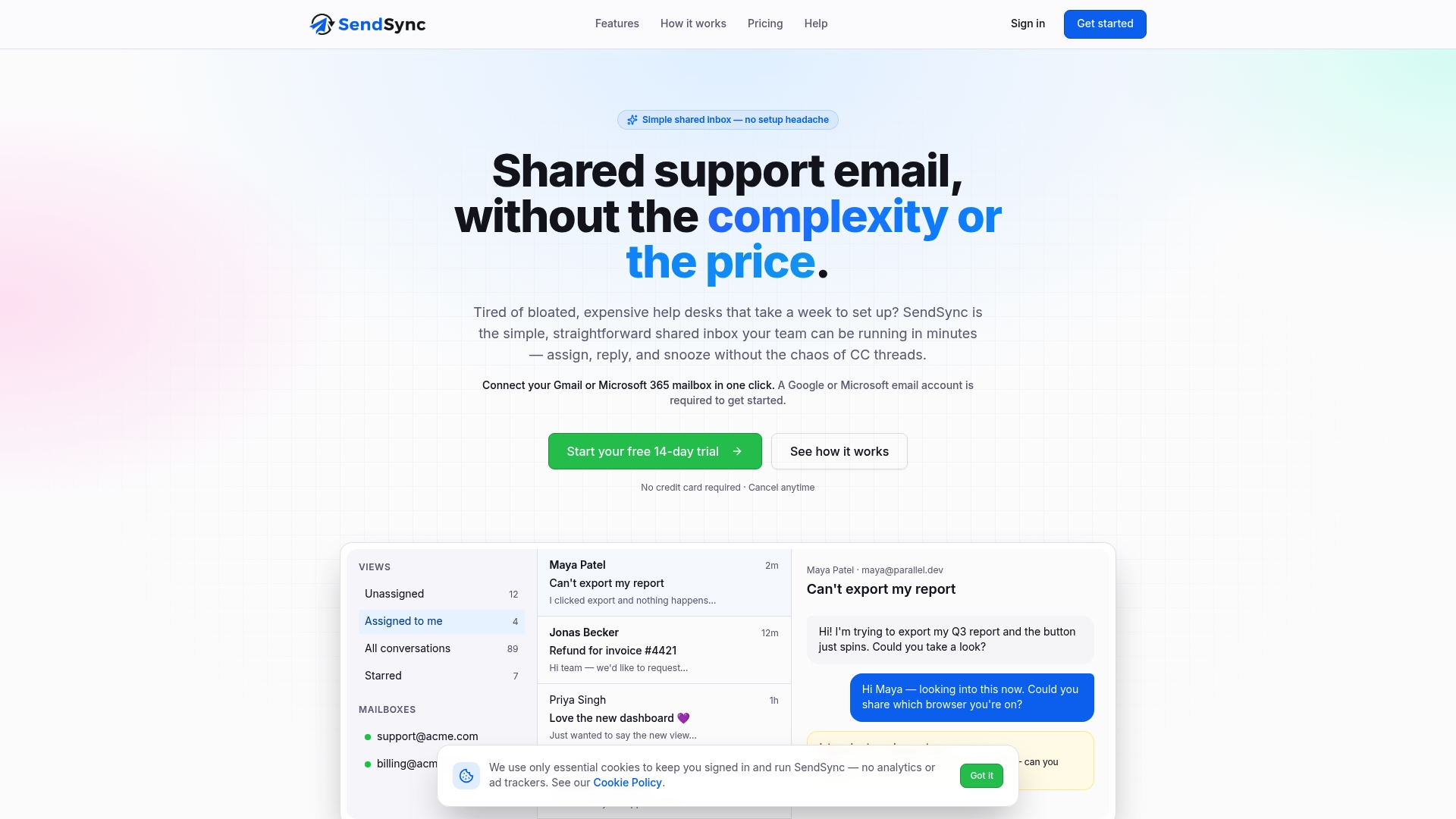
Assignments, saved views, split inbox patterns, and simple routing automations map directly onto the steps above: sweep, defer, assign, archive. Plans run across multiple tiers, all with unlimited users and no per-seat fees. Start a 14-day free trial and see whether your triage windows get shorter in the first week.
Sources
For a deeper look at the triage method itself, including the 2-minute rule and batch scheduling, see Superhuman’s guide to email triage. For workflow examples built around shared inboxes, see SendSync’s guide to scalable inbox workflows.
- Email triage
FAQ
What is the difference between email triage and answering?
Triage is the decision step: sort each message into reply, defer, assign, or archive. Answering is the separate work step that happens afterward, during a dedicated block rather than during the sweep itself.
How often should a team run email triage?
Three fixed windows a day, such as morning, midday, and end of day, work well for most teams according to batching research cited by Superhuman. Checking constantly throughout the day increases stress without speeding up real resolution.
What is the 2-minute rule in email triage?
The 2-minute rule, from David Allen’s Getting Things Done, says you should handle any task immediately if it takes under two minutes. Applied to email, it clears fast replies during the sweep so only real work gets deferred or assigned.
How do you recover from a large email backlog?
Archive everything older than two weeks and start triaging only recent messages, a restart tactic recommended in triage workflow guidance. Trying to process a backlog in order, oldest first, usually stalls before it reaches anything current.
Can automation handle email triage for a team?
Automation and AI-assisted features can draft instant replies and summarize threads for high-volume, predictable requests, which speeds up routine sorting. Client-sensitive or nuanced messages still need a human review step before anything goes out, since automation handles volume but not judgment.