
Automate Follow Up Emails for Teams: 5 Sequences, No Code
Automate Follow Up Emails for Teams: 5 Sequences, No Code ! Team lead configuring email follow-up automation Follow-up automation means using trigger-based email sequences, instead of manual reminders, to reach contacts at the right moment and stop the moment they respond.

Follow-up automation means using trigger-based email sequences, instead of manual reminders, to reach contacts at the right moment and stop the moment they respond. The approach that works is simple: a handful of well-timed sequences tied to real triggers, with a global stop-on-reply rule so no one gets a duplicate message. Tools like SendSync shorten the setup to minutes on a Gmail or Microsoft 365 mailbox and help reduce duplicate replies by keeping responses visible to the whole team.
TL;DR:
- Send nudges over seven to fourteen days; reach hot leads within hours, while enterprise deals can allow ten to fourteen days between messages.
- Start sequences from clear events, such as form submissions or meeting endings, and branch on clicks or company size when messaging should differ.
- Choose CRM sequences for pipeline visibility, a shared inbox for teams working in email, and a workflow platform when triggers come from disconnected tools.
- Test with two or three internal contacts, including a reply from another device, then track reply rate or time to first reply weekly before expanding.
- Hand nuanced replies, complaints, contact changes, and requests to reconnect later to a person; automation should cover routine reminders, not changing relationships.
Table of Contents
- Core sequence patterns for automated follow-ups
- Which triggers should start a sequence, and how do you branch?
- How often should you follow up without annoying people?
- What should your follow-up templates actually say?
- Choosing the right tool: mailbox, CRM, or workflow platform
- A step-by-step checklist to launch your first pilot
- Tracking the numbers that prove it’s working
- Why a shared inbox makes this easier to run safely
- When to automate and when to hand things back to a person
- Start your SendSync trial and launch your first sequence
- FAQ
- Sources
Core sequence patterns for automated follow-ups
Most teams only need five sequence types, each built for a different moment in the relationship.
- Welcome sequence: fires after signup or first contact, sets expectations, and points to a next step. A typical cadence is immediate, then a value-add message 2 days later.
- No-response sequence: the workhorse for sales and support follow-up. It runs when someone has gone quiet after an initial outreach, typically 3 to 5 steps spaced 2 to 3 days apart.
- Meeting follow-up sequence: triggers right after a call ends, usually a recap within an hour, then a nudge at day 3 if there is no reply.
- Drip sequence: a scheduled series of educational or nurture messages sent over weeks rather than days, useful for leads not yet ready to buy.
- Stay-in-touch sequence: a low-frequency check-in, often monthly or quarterly, for contacts who are warm but not active.
A sample no-response cadence looks like this: day 0 (initial message), day 2 (first nudge), day 5 (second nudge with a new angle), day 9 (final check-in before archiving). Each step should feel like a different reason to reply, not a repeat of the last one.
Every sequence, regardless of type, needs the same safety net: a stop-on-reply rule that ends the sequence the instant the contact replies, clicks a link, or books a meeting. This prevents the awkward experience of sending a reminder to someone who already answered, and it is the single most common automation mistake teams make when they skip it. Enrollment itself should happen automatically from a defined event, covered next, rather than a person manually adding contacts one by one.
CRM sequence builders are typically composed of three building blocks: a message, a delay, and a condition for branching or exit, and the best ones send from the team’s own mailbox so replies land in one place instead of scattering across inboxes, according to Nimble’s guide to CRM follow-up automation. That one-to-one feel matters more than people expect: a sequence that reads like a mail blast gets ignored, while one that reads like a person wrote it gets replies.

Which triggers should start a sequence, and how do you branch?
The quality of a follow-up sequence depends more on its trigger than its copy. A perfectly written email sent at the wrong moment still gets ignored.
- Form submission: starts a welcome or no-response sequence the moment someone requests information.
- Meeting end: fires a recap and next-step sequence as soon as a call wraps, often synced from a calendar or video tool.
- Pipeline stage change: enrolls a contact when a deal moves to “proposal sent” or similar, so follow-up matches where they are in the buying process.
- Webhook from another tool: lets you start a sequence from any system that can send an event, such as a support ticket closing or a trial ending.
- Manual enrollment: a deliberate, one-off add for edge cases that don’t fit a standard trigger.
The most reliable automations start from a clear, unambiguous event, what one guide calls the “starting gun,” so outreach lands when interest is genuinely at its peak, rather than on an arbitrary schedule, per Taskade’s guide to webhook triggers.
Branching adds precision on top of the trigger. If a contact opens an email but doesn’t click, send a softer nudge; if they click a pricing link, route them into a faster, sales-focused sequence instead of the generic drip. A form field like “company size” can branch contacts into separate sequences with different messaging for enterprise versus small-business buyers.
None of this works without a global exit condition. Every branch, no matter how it starts, must check for a reply first and stop immediately if one exists.
Pro Tip: Build your stop-on-reply rule once as a global setting, not inside each individual sequence, so you never forget to add it to a new one.
How often should you follow up without annoying people?
Timing is where most automated follow-up strategies either work or quietly fail. Too aggressive, and replies stop coming. Too slow, and the opportunity goes cold.
- Default cadence: an initial acknowledgment, followed by 2 to 3 nudges spread across 7 to 14 days, each with a slightly different angle or value point.
- Hot leads: compress the cadence. Someone who just requested a demo should hear back within hours, not days, since response speed correlates strongly with conversion odds, according to Lead Response Management’s research.
- Enterprise buying cycles: stretch the cadence. A multi-stakeholder deal can tolerate, and often expects, nudges spaced 10 to 14 days apart over a longer window.
- Thread hygiene: keep every follow-up in the same email thread rather than starting a new one each time, so the contact sees the full conversation history and doesn’t have to search for context.
Sequence length matters as much as spacing. Keeping a sequence under about seven steps avoids fatiguing the recipient, based on guidance from Mailmeteor’s follow-up campaign documentation. Beyond that point, reply rates tend to flatten while unsubscribe risk climbs.
Single-thread, single-sender follow-up also protects deliverability. A contact who sees the same name and the same thread every time is far less likely to mark a message as spam than one getting messages from a rotating cast of senders or a flood of separate emails.
What should your follow-up templates actually say?
Good follow-up copy is short, specific, and gives the reader an easy way to respond. The sequence type should shape both the subject line and the opener.
- No-response subject lines work best as a plain reference to the prior conversation, such as “Following up on [topic]” or just a re-used original subject line with “Re:” attached, since novelty subject lines can read as spam.
- Meeting follow-up openers should restate one specific thing from the call, not a generic “great talking with you,” so the recipient knows this isn’t a template.
- Drip sequence CTAs should ask for a small, low-friction action, like reading a resource or watching a short clip, rather than “let’s schedule a call” too early in the relationship.
Personalization doesn’t need to be heavy to work. A merge tag for first name, company, and the specific product or page they engaged with covers most of the value; stacking in five variables rarely improves reply rates and multiplies the chance of a broken template.
Three short templates to adapt:
No-response nudge: “Hi [First Name], wanted to bump this up in case it got buried. Still happy to answer any questions about [topic]. Worth a quick call this week?”
Meeting recap: “Thanks for the time today, [First Name]. Quick recap: [one specific point]. Next step on our end is [action]. Let me know if I missed anything.”
Stay-in-touch check-in: “Hi [First Name], it’s been a while. Anything changed on your end with [specific need discussed]? Happy to pick the conversation back up whenever it’s useful.”
Choosing the right tool: mailbox, CRM, or workflow platform
The technical setup decision comes down to one question: should the sequence send from a person’s actual mailbox, or from a platform’s sending infrastructure?
Sending from a connected mailbox, the approach a shared inbox like SendSync uses, preserves the one-to-one feel that gets replies, since the message looks and threads exactly like a normal email. Platform-sent mail, common in marketing automation tools, scales better for large batches but tends to read as more obviously automated and can land in different deliverability tiers.
- Native CRM sequences work well when follow-up is tied tightly to pipeline stages and sales reps need visibility inside the CRM itself.
- Shared-inbox automations fit support and sales teams who live in email and want triage, assignment, and follow-up in one place without a separate tool.
- Workflow platforms like Zapier are the right layer when triggers come from multiple disconnected tools, since they can centralize leads from forms, chat, and other sources and route them into whichever sequence builder you use, per Zapier’s lead follow-up automation guide.
Before launch, verify these integration points regardless of which path you pick:
- Mailbox connection (OAuth for Gmail or Microsoft 365, not raw SMTP/IMAP credentials where avoidable).
- API keys or webhook URLs for any third-party trigger source.
- Reply-detection is active and tested, so the stop-on-reply rule actually fires.
- Deduplication rules exist so the same contact can’t enter two overlapping sequences at once.
For teams building this on top of a CRM, our guide to shared inbox CRM integration covers the permission model in more detail.
A step-by-step checklist to launch your first pilot
A pilot should take days, not weeks. Breaking it into three stages keeps the scope small enough to actually ship.
- Define the goal: pick one outcome, like faster response time on inbound leads, and one target segment to test it on.
- Pick the success metric: reply rate or time-to-first-reply, not both, to keep the pilot easy to judge.
- Draft templates: write the 2 to 4 messages the sequence needs, using the structures from the templates section above.
- Set stop rules: configure the global stop-on-reply condition before building anything else.
- Connect the mailbox or CRM: link the sending account and confirm the connection with a test send.
- Configure the sequence: set the trigger, the delays, and any branching conditions.
- Enable reply-detection and test with seed contacts: send the sequence to two or three internal addresses first and confirm replies actually stop it.
- Go live and monitor the first 48 hours: watch for stuck sequences, missed stops, or formatting issues before scaling to the full segment.
Pro Tip: Run your seed-contact test with a reply sent from a different device or email client than the one you used to send, since reply-detection bugs often only show up across platforms.
After the first week, revisit timing and copy based on where replies and drop-offs actually happened, not where you guessed they would.
Tracking the numbers that prove it’s working
A handful of KPIs tell you whether follow-up automation is actually helping rather than just running.
- Reply rate: the share of enrolled contacts who respond at any point in the sequence.
- Time-to-first-reply: how long it takes from the first message to the first response, your clearest speed metric.
- Conversion-to-meeting or conversion-to-sale: the outcome that actually matters for revenue, not just engagement.
- Unsubscribe and complaint rates: an early warning sign that cadence or copy has drifted too aggressive.
Automated, trigger-based follow-up sequences with a reply-stop rule are the most reliable way to close the gap between “when someone showed interest” and “when we actually reached them.” Calculating percent improvement in response time requires picking one formula and sticking with it; comparing average time-to-first-reply before and after automation is the clearest version, and it’s worth being explicit about which direction “improvement” points, since reduction and increase formulas are easy to mix up, as this breakdown of response-time percentage formulas explains.
A simple weekly review, five KPIs on one dashboard, takes less time than the sequences themselves took to build, and it’s the habit that catches a broken stop-rule before it sends a hundred duplicate replies.
Why a shared inbox makes this easier to run safely
A shared inbox removes the biggest risk in follow-up automation: two people replying to the same contact because neither saw the other’s message. A shared inbox like SendSync connects a Gmail or Microsoft 365 mailbox without DNS changes, so a pilot sequence can go live quickly instead of after a multi-step setup.
- Unlimited users on every plan lets the whole team see sequence activity and replies without per-seat limits forcing a smaller pilot group.
- Shared visibility means a reply from any channel immediately shows to the whole team, which helps make a stop-on-reply rule reliable in practice.
- Assignment and internal notes help keep a contact moving to the right person once automation hands off to a human.
For teams setting up automated acknowledgments alongside sequences, our auto-reply best practices guide covers the wording and timing that keep those messages useful rather than annoying. A two-week pilot measuring reply rate and time-to-first-reply is enough to know whether it’s working.
When to automate and when to hand things back to a person
The failure mode worth watching for isn’t too little automation, it’s a sequence that keeps running after the relationship has clearly changed tone, a complaint, a change of contact, a “not now but check back in six months.” Automation handles the predictable 80%. The moment a reply shows nuance, hand it to a person. Readers can find more of this thinking in our ongoing SendSync posts on follow-up practice.
— Nick
Start your SendSync trial and launch your first sequence
Everything in this guide, the triggers, the stop-on-reply rule, the pilot checklist, runs faster when replies live in one shared place instead of scattered across separate inboxes. SendSync connects your Gmail or Microsoft 365 mailbox quickly without DNS setup, and plans include unlimited users so your whole team sees activity from day one.
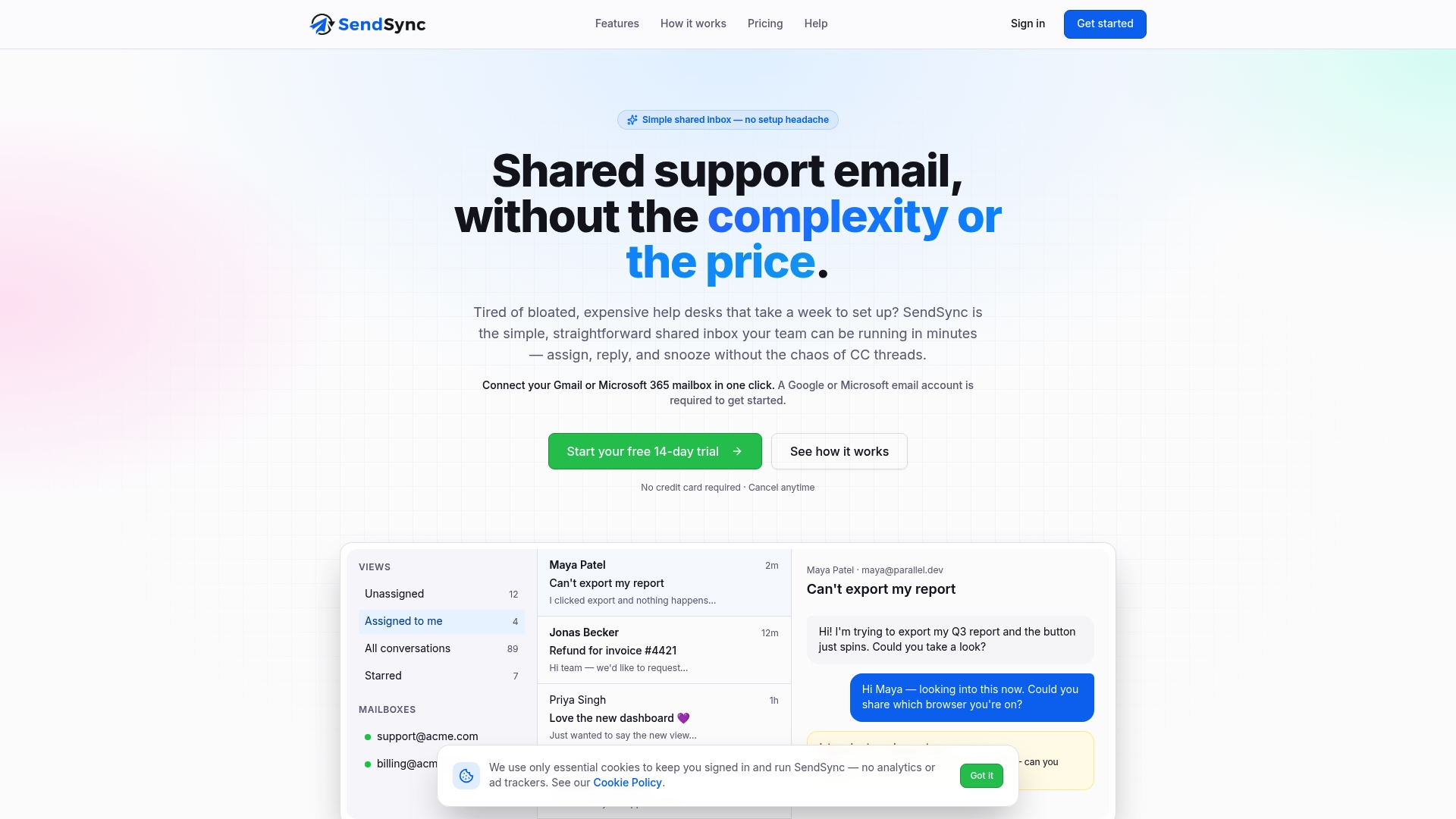
Plans start at $10 a month on the Founder tier, with Starter, Growth, and Scale available as the team grows. Check SendSync plans and start a trial to run your first automated follow-up pilot this week.
FAQ
How do I automate follow-ups without losing a personal tone?
Automate the trigger and the timing, not the whole voice: send from an actual mailbox rather than bulk platform infrastructure, keep sequences under seven steps, and always include a stop-on-reply rule, per Mailmeteor’s follow-up documentation. Writing each step like a different reason to reply, instead of a repeated reminder, keeps the tone human.
How do I set up automation rules in a CRM-based sequence tool?
Most CRM sequence builders work with three components: a message, a delay, and a condition for branching or exit, which you configure once a trigger like a form submission or pipeline stage change is defined, according to Nimble’s CRM automation guide. Test the sequence with seed contacts before enrolling real leads to confirm the conditions fire correctly.
How do I track whether my follow-up automation is working?
Track reply rate and time-to-first-reply on a weekly dashboard, and confirm stop-on-reply is actually halting sequences for anyone who responds. Field verification over the first couple of weeks after launch matters more than lab testing alone, since real contact behavior often differs from test scenarios, per guidance on monitoring automated systems after rollout.
What are the basic steps for setting up a follow-up automation?
The four core steps are: define a trigger (like a form submission or meeting end), build the message and delay sequence, add branching conditions for behavior like opens or clicks, and set a global exit rule for replies. Workflow platforms such as Zapier can connect the trigger source to your sequence tool when the two systems don’t talk to each other natively, as described in Zapier’s lead follow-up automation guide.
What’s a realistic cadence for a first follow-up sequence?
A safe starting point is an initial message followed by 2 to 3 nudges spread across 7 to 14 days, each with a different angle rather than a repeat. Hot leads warrant a faster cadence measured in hours, while longer enterprise cycles can stretch nudges to every 10 to 14 days.
Sources
- Taskade — webhook trigger guide
- Nimble — 10 ways to automate follow-up emails in your CRM
- Mailmeteor — follow-up campaign docs
- Zapier — Lead Follow-Up Automation